Botox for Forehead Lines: Natural Results and What to Expect
A premium guide to botox for forehead lines, including how it works, how natural results are achieved, treatment timeline, safety, and what patients can expect.
Lek. Katarzyna Kęcka, March 2026, 8 min read

Botox for forehead lines is one of the most frequently requested aesthetic treatments for patients who want to soften horizontal lines across the upper forehead without losing natural facial expression. These lines usually develop over time through repeated muscle movement, skin aging, sun exposure, and individual anatomy.
A modern botox approach is not about making the forehead look rigid or frozen. In a premium clinical setting, the goal is to reduce the appearance of wrinkles while preserving harmony, movement, and a rested appearance. In this guide, we explain how forehead botox works, what results you can expect, and how treatment is planned in a subtle and individualized way.
What Causes Forehead Lines?
Forehead lines are typically caused by repeated contraction of the frontalis muscle, the muscle responsible for lifting the eyebrows and creating horizontal expression lines across the forehead. In younger skin, those lines may only appear with movement. Over time, they can remain visible even at rest.
The depth and visibility of forehead lines can also be influenced by genetics, skin thickness, collagen loss, hydration, lifestyle, and sun exposure. This is why two patients of the same age may present very differently, and why treatment should always be adjusted to the individual rather than performed using a fixed formula.
How Botox Treats Forehead Wrinkles
Botox works by temporarily relaxing selected muscles responsible for creating dynamic lines. In the case of forehead wrinkles, carefully placed injections reduce excessive contraction of the frontalis muscle. As the muscle movement softens, the skin above it appears smoother and less creased.
This does not mean that all movement must disappear. In a well-planned treatment, the aim is usually to reduce strong repetitive folding while maintaining a natural range of expression. This is especially important in the forehead, where over-treatment can affect facial balance and brow position.
Can Forehead Botox Look Natural?
Yes — natural forehead botox is absolutely possible when treatment is based on anatomy, expression pattern, and conservative dosing. The most elegant results are often the least obvious: the forehead looks smoother, the face appears more rested, and expression is softened rather than erased.
A natural result depends on several factors, including muscle strength, existing asymmetry, brow position, and the patient’s preference for movement. Some patients want a very smooth forehead, while others want to keep more expression. A premium consultation should make room for that nuance.
What Happens During a Botox Consultation and Treatment
A forehead botox appointment should begin with a consultation. During this stage, the doctor assesses facial movement, resting lines, brow shape, forehead height, muscle strength, and overall facial balance. The consultation is also the moment to discuss goals, previous treatments, and the kind of result the patient wants to achieve.
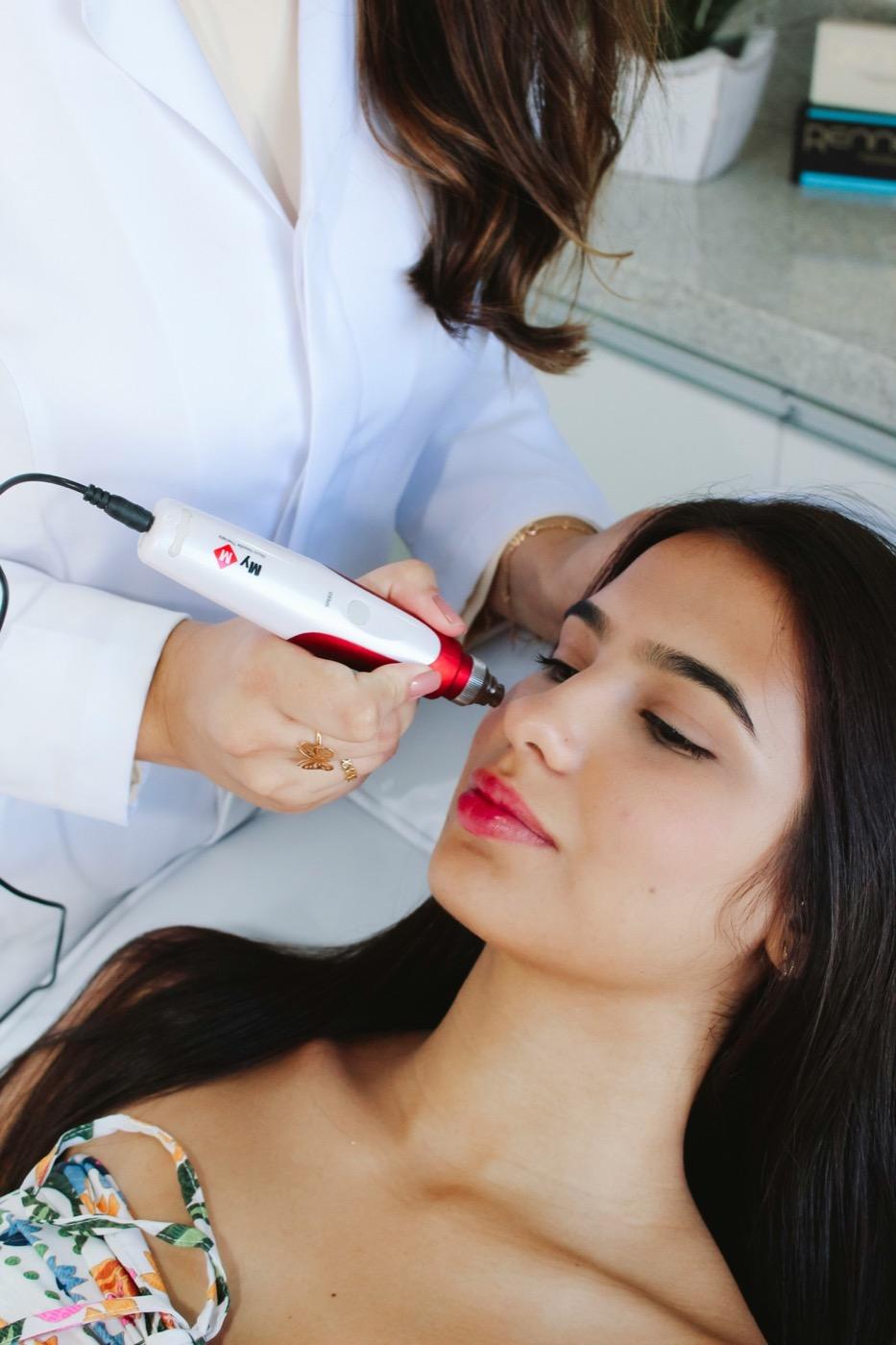
The injection process itself is usually very quick. Small amounts of product are placed in carefully selected points across the treatment area. Most patients describe the discomfort as mild and brief. In many cases, the entire treatment takes only a few minutes after the consultation is complete.
When Will You See Results?
Botox does not work instantly. Some patients begin to notice early changes within a few days, but the full result usually develops gradually. Movement often starts to soften first, while the skin appearance continues to improve over the following days.
A practical timeline is as follows: slight changes may begin around day 3 to 5, clearer improvement is often seen around day 7, and the full effect is usually assessed around day 10 to 14. This is why review appointments, when offered, are typically scheduled after two weeks rather than immediately.
How Long Does Forehead Botox Last?
For most patients, forehead botox lasts around three to four months. However, this can vary depending on muscle activity, metabolism, treatment history, dose, and individual response. Some patients metabolize the product more quickly, while others maintain results for longer.
Regular treatment can also influence how the area behaves over time. When strong repetitive movement is reduced consistently, some patients notice that lines form less aggressively between appointments. That said, treatment intervals should always be guided by anatomy and aesthetics, not by a rigid calendar.
Is Botox Safe for Forehead Lines?
When performed by a qualified medical professional, botox is widely used and well established in aesthetic medicine. Safety depends not only on the product itself, but on correct patient selection, precise dosing, knowledge of anatomy, and appropriate injection technique.
As with any medical treatment, side effects and risks should still be discussed. Temporary redness, mild swelling, or small bruises may occur. In some cases, overly aggressive or poorly placed treatment can affect eyebrow balance or create a heavy feeling in the forehead. This is one reason why experience and a careful consultation matter so much.
Who Is a Good Candidate for Forehead Botox?
Good candidates are usually patients who notice visible horizontal forehead lines during expression and want a smoother, fresher appearance. Some are seeking prevention, while others want to reduce lines that are already established at rest.
The best treatment plan depends on more than the lines alone. Brow position, eyelid heaviness, forehead anatomy, and the interaction between the forehead and frown muscles all influence how botox should be used. In some faces, treating the forehead requires a particularly refined and conservative approach.
Frequently asked questions
Does botox remove forehead wrinkles completely?
Not always completely. Botox is designed to soften dynamic wrinkles by reducing muscle movement. The final effect depends on how deep the lines are, skin quality, and how strongly the muscles contract.
Will my forehead look frozen?
A frozen look is not the goal of modern premium treatment. With careful dosing and proper planning, it is possible to smooth the forehead while preserving natural expression.
How many units are used in the forehead?
There is no single correct number for every patient. The amount depends on forehead size, muscle strength, brow position, treatment goals, and overall facial balance.
Is forehead botox painful?
Most patients describe the treatment as very tolerable. The injections are quick and use fine needles, so discomfort is usually brief and mild.
Can forehead botox lift the eyebrows?
In some cases, carefully planned botox can support a subtle brow effect. However, this depends on the relationship between forehead muscles, frown muscles, and the patient’s natural anatomy.